
I used to think I was the problem.
For almost a year, every load of laundry that came out of my washing machine smelled… off. Not terrible. Not like mildew exactly. Just this faint, damp undertone that wouldn’t go away — no matter what I did.
I noticed it first in the towels. That stale smell when you dry your face after a shower. Then it crept into my kids’ school clothes. My husband’s work shirts. The sheets I had just washed the night before.
It wasn’t dramatic. It was just… wrong. And once I noticed it, I couldn’t stop noticing it.
I tried everything the internet told me to try.
I wiped the gasket down after every load. I left the door cracked open to let the drum air out. I ran the “tub clean” cycle on my Samsung front loader every month. I poured white vinegar into the drum and ran it on the hottest setting. I tried baking soda. I tried a full cup of bleach on sanitize.
For a day or two, things seemed better.
Then the smell came back.
I started rewashing loads. Sometimes twice. I’d pull out a shirt, hold it to my nose, and if something wasn’t right — back in it went. More water. More detergent. More time. I was doing laundry that had already been done, and I still wasn’t confident it was actually clean.
My husband brought it up one evening. Gently. He said his gym shirts smelled damp even after washing. I told him I’d tried everything I could think of. He suggested maybe we should call someone — a plumber, a repair tech, something.
But who do you call for a smell?
It felt ridiculous. And honestly, it bothered me more than it should have. Because I take pride in keeping our home clean. I’m the person who wipes the counters twice. Who reads the labels on cleaning products. Who notices when something is off before anyone else does.
My washing machine is supposed to be the one thing in my house that makes things clean. That’s its entire job. And instead, it was sending my kids to school in clothes that carried a smell I couldn’t get rid of. It felt like a betrayal — by the machine I trusted most.
I started Googling late at night. “Why does my washing machine still smell after cleaning.” “Front loader odor won’t go away.” “Vinegar not fixing washer smell.”
I found forum posts and Reddit threads that all contradicted each other. One person said more vinegar. Another said vinegar makes it worse. One said bleach is the answer. Someone else said bleach damages the rubber gasket. A cleaning blog recommended essential oils. Another said that just masks the problem.
I was going in circles — frustrated, confused, and running out of ideas.
Then one night, sitting on the couch at about 11:30pm, I found something that changed everything.
It was a video from an appliance technician who had spent over two decades servicing residential washers — mostly front loaders and HE machines. In the video, he was standing in someone’s laundry room with a washing machine pulled apart behind him.
What he said stopped me.
“People call me because they think their washer is broken. They’ve tried vinegar. Bleach. Tablets. The self-clean cycle. Nothing fixes it. So they assume something is mechanically wrong.”
He paused.
“But when I pull the machine apart, nine times out of ten, the motor’s fine. The pump’s fine. The electronics are fine. The problem isn’t mechanical.”
Then he said: “It’s biological.”
That word stuck with me. Because I had never once thought about my washing machine as a place where something could grow.
He explained that in the last 10–12 years, the machines changed — and the problems changed with them. Newer washers got more water-efficient. Better for the water bill. But that efficiency came with a trade-off most homeowners never hear about.
What He Showed Next Changed How I Thought About My Washer
He turned the camera toward the machine behind him. A Samsung front loader. About three years old. Looked perfectly normal from the outside. Clean drum. No visible issues.
Then he started taking it apart.
He removed the front panel. Disconnected the drain hose. Pulled the outer tub away from the drum.
And behind the drum — in the space between the inner drum you see and the outer tub you don’t — was a layer of dark, sticky residue coating the back surface.
He pointed to the gasket folds. Packed with grey-brown buildup. He held up the drain hose and showed the inside — coated with a film. He opened the detergent dispenser channel. Same thing.
“People wipe the gasket and think they’re cleaning the machine. But the gasket is just the front door. The real buildup lives in the places your hands can’t reach.”
Then he started naming them, one by one: the back of the outer tub. The deep folds inside the door gasket. The drain hose. The pump filter. The detergent dispenser channel. The recirculation path where water loops back through the system. The narrow gaps around the drum fins.
Every zone he named was a place I’d never thought about. Never cleaned. Never even knew existed.
And every single one was coated.

I sat there staring at my screen. My machine was the same age. Same brand. And I’d been putting my kids’ pajamas in it for three years — trusting that the machine meant to clean their clothes was actually doing its job. It wasn’t. It was putting their clothes through contamination I couldn’t see.
The Hidden Buildup Cycle — And Why It Keeps Coming Back
He explained that what was coating those hidden surfaces wasn’t just “dirt.” It was something more specific — and more persistent.
He called it the hidden buildup cycle. And once he walked me through it, everything I’d been experiencing finally made sense.
Here’s the short version:
Every time you run a load of laundry, your washer uses water and detergent to clean your clothes. But modern HE machines use far less water than the machines from 15–20 years ago. Older washers used 40+ gallons per cycle — enough to flush residue out the drain. Many of today’s HE machines use as little as 13 gallons.

Less water means less rinse power. And less rinse power means residue doesn’t fully clear from the hidden areas inside the machine.
So over time, layer by layer, it builds:
- Detergent residue clings to the inner walls of the outer tub — the part behind the drum.
- Body oils, skin cells, and fabric softener coat on top of it.
- Lint and loose fibers settle into corners and channels where water barely flows.
And in the warm, dark, damp environment inside a washer — an environment that often never fully dries between cycles — something starts to form.
He called it biofilm — a living layer of bacteria that sticks to surfaces, feeds on the residue, and produces the compounds that cause that recurring musty odor.

The part that really got me:
And every time you run another load — especially with warm water and fresh detergent — you’re potentially feeding the cycle. Adding more residue. More moisture. More material for it to sustain itself.
“This is usually why the smell keeps coming back. People clean the drum. They wipe what they can see. But the buildup underneath tends to recover. So the cycle continues.”
That’s when the full weight of it hit me. The machine I’d been trusting to make things clean wasn’t just failing to clean — it was actively reintroducing contamination into every load. The thing designed to protect my family’s clothes was working against them.
Why the Methods You’ve Already Tried Usually Fall Short

This is where it clicked for me. And honestly, it made me feel less frustrated — because for the first time, I understood that none of the things I’d tried were wrong. They just weren’t designed for this specific problem.
Vinegar is an acid, and it works well on mineral deposits like hard water stains and calcium buildup. That’s what it’s good at. But biofilm isn’t a mineral — it’s a bacterial layer that sticks to surfaces in a way vinegar typically can’t fully dissolve. That’s often why the smell seems to fade for a day or two after a vinegar rinse, then comes back. The surface gets disrupted. The layers underneath remain.
Bleach is a real sanitizer, and it does kill bacteria on surfaces it physically contacts. The limitation is reach. Bleach sits in the drum — which is actually one of the cleanest parts of the machine already. It typically doesn’t travel with enough contact into the gasket folds, the drain hose, the pump filter, or the dispenser channels where the buildup tends to concentrate.
Baking soda can scrub visible residue from surfaces you can access, but once it dissolves in water it becomes largely inert. It doesn’t have the ability to reach buildup hidden deeper in the machine.
The “tub clean” cycle on most machines runs hot water through the drum — which, again, is the part that’s already relatively clean. It doesn’t typically reach the outer tub, the hoses, the pump, or the hidden zones where buildup tends to accumulate.
Store-bought washer cleaning tablets — the ones at Target or on Amazon — often create the feeling of a deep clean. They fizz. They foam. They leave a chemical scent that signals “something happened.” And for some households, they do provide temporary improvement. But many are formulated primarily for the drum surface. For people dealing with established buildup in the hidden zones, the results are often inconsistent — the odor fades briefly, then returns.
None of these are bad products or bad ideas. They’re logical first steps. They’re what anyone would try. I tried all of them — more than once.
But they’re designed to clean the parts of the machine you can already see and touch. The problem, for a lot of us, lives in the parts we can’t.
“It’s like wiping the outside of a pipe and wondering why the water still tastes bad. If the buildup is inside, you need something that reaches inside.”
I sat there for a while after that video ended.
Because every word of it matched my experience. The vinegar working for a day. The bleach doing nothing. The tablets that smelled like they were working — until the musty odor crept back a few days later.
For the first time, I wasn’t confused. I wasn’t blaming myself. I finally understood why nothing I’d tried had been able to fully solve it.
The problem was never my detergent. It wasn’t my water. It wasn’t anything I was doing wrong.
It was a contamination cycle forming inside my machine — in the gasket folds, the drain hose, the pump filter, the outer tub, the dispenser channels — places I couldn’t see, couldn’t reach, and didn’t even know existed.
What I Didn’t Know Yet Was That He Had Already Found Something That Worked
After that video, I kept digging. I watched everything else he’d posted about washer contamination. I read articles he referenced. I looked up published research on microbial buildup in household washing machines — studies on how biofilm forms in HE appliances and why it resists common cleaning methods.
The pattern was consistent:
Modern HE washers — with their sealed doors, low water volume, and retained moisture — often create conditions where residue accumulates faster than standard cleaning methods can remove it. The buildup isn’t ordinary surface grime. It forms in layers. It sticks to surfaces. And it tends to resist the methods most homeowners reach for first.
But the part that gave me real hope was this:
The research kept pointing to the same idea — that the most effective approaches don’t try to scrub the buildup from the outside. They work by getting into the layered structure, loosening what’s bonded to the surfaces, and helping flush it out of the zones that surface cleaning can’t reach.
Not stronger chemicals. Not hotter water. Not more scrubbing.
Something designed specifically for the hidden buildup problem.
And this technician — the one who’d pulled apart thousands of machines and seen this contamination firsthand — had found a product built on that exact approach.
Not another surface cleaner. Not another drum-fizzing tablet.
Something designed to help reach the buildup hiding in the gasket folds, the hoses, the pump filter, the outer tub, the dispenser channels — and help break it down so it could actually flush out.
He’d started recommending it to clients — the ones who called him convinced their washer was broken, the ones who’d already tried everything, the ones who were about to spend $800 or more replacing a machine that wasn’t actually broken.
And what they were telling him — what he was seeing in machine after machine — was different from anything he’d come across in over twenty years of doing this work.
For the first time in almost a year of frustration, I felt something I hadn’t felt in a long time:
I wanted to try it. I needed to see for myself whether this could actually work.
The Product He Recommended Wasn’t What I Expected
I want to be honest about something: when I finally found the product page, my first reaction was skepticism.
I’d already bought washer cleaning tablets before. Twice. The first time was a popular brand from Target — the one with thousands of reviews. The second was a different brand from Amazon that promised a “deep clean.” Both times, I ran the tablet, smelled chemicals for an hour, and thought it had worked. Both times, the musty smell was back within a few days.
So when I saw another tablet-shaped product, part of me thought: Here we go again.
But the more I read, the more I realized this wasn’t positioned the same way.
It wasn’t promising a “fresh scent.” It wasn’t marketing itself as a deodorizer. It wasn’t leading with fragrance or fizz.
It was called CleanCycle™ Washer Purifier. And the way it described itself was different from anything I’d seen in this category.
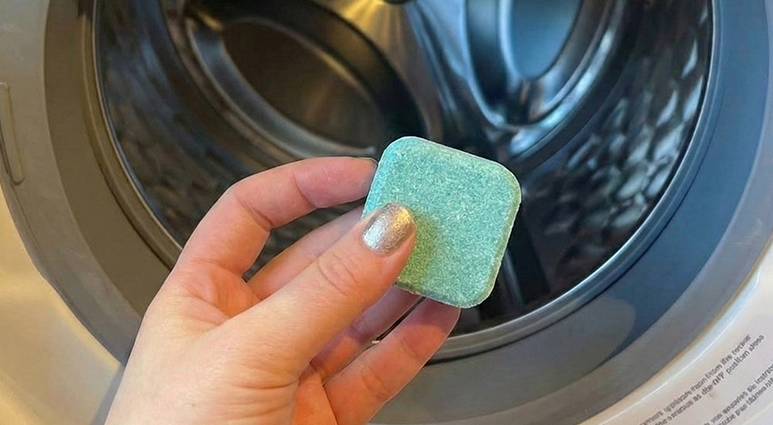
It called itself a washer reset system.
Not a surface cleaner. Not a drum freshener. A system designed to help reach the hidden zones inside the machine — the gasket folds, the drain hose, the pump filter, the outer tub, the dispenser channels — and help break down the layered buildup that surface cleaning typically can’t address.
The three things it was designed to do matched exactly what the technician had described:
The residue layers that form in hidden zones behind the drum and inside the internal plumbing of the machine.
The buildup layer that sticks to surfaces and tends to rebuild after surface-level cleaning.
The loosened material out of the machine — formulated without the heavy fragrance many buyers complain about and designed to help rinse clean.
I noticed the reviews, too. Not the star rating — I’d learned to look past that. I was looking at what people were saying. And I kept seeing the same pattern over and over:
People who had tried vinegar. Tried bleach. Tried other tablets. Tried the self-clean cycle. Tried everything. And then tried this — and were describing improvement.
I ordered a single pack. Twenty-five tablets. Enough for over two years of monthly use. And I figured if it didn’t work, there was a 60-day money-back guarantee — so the risk wasn’t really on me.
The Night I Ran the First Tablet
I’m going to tell you exactly what happened, because it’s the reason I’m writing this.
I waited until the kids were in bed. I took everything out of the washer. I dropped one tablet into the empty drum — no measuring, no mixing, nothing else.
I selected the hottest cycle on my Samsung and pressed start.
About ninety minutes later, I heard the cycle end. I walked over and stood in front of the machine for a second before opening it, because honestly, I was bracing myself for disappointment.
I opened the door.
And the machine just smelled… neutral. Not like chemicals. Not like fragrance. Not like a faint version of the same mustiness I’d been living with. Just the plain smell of a wet drum. For me, that was the first time in months the machine hadn’t hit me with that damp undertone when I opened the door.
The real test was the next load.
The next morning, I washed a load of towels — the ones that had been the worst offenders. When the cycle finished, I pulled one out and held it to my face.
It smelled like a towel. Just clean cotton. No undertone. No damp. No hint of anything underneath.
I’m not going to pretend I had some dramatic, movie-worthy moment. But I will say this: after months of rewashing loads and doubting my own nose and wondering what I was doing wrong — finally pulling out a towel that just smelled clean felt like a weight coming off.
I washed my kids’ school clothes that afternoon. My husband’s work shirts. The sheets that night. Each load came out smelling the way I’d wanted my laundry to smell for the past year — like nothing. Just clean fabric.
I felt like I had my laundry back. And more than that — I felt like I could trust the machine again.

What I Noticed in the Reviews
After my first week, I went back and read through the reviews more carefully. I wasn’t looking for five-star validation. I wanted to see whether the pattern I experienced was something other people were describing too, or whether I’d just gotten lucky.
What stood out wasn’t any single dramatic review. It was the pattern.
Over and over, people described the same escalation I’d been through: they’d tried vinegar, bleach, store-bought tablets, the tub-clean cycle. Nothing gave them lasting results. Then they tried this — and many described noticing a difference early on.
A few things kept coming up:
Some reviewers described seeing discolored water or residue after the first cycle — even from machines that were relatively new or regularly maintained. That seemed consistent with what the technician had explained: the buildup starts early and accumulates in places you can’t see, regardless of how well you maintain the visible parts.
Reviewer after reviewer described the same thing I experienced — not a “fresh” scent, but the absence of scent. For a lot of people, that distinction mattered. They weren’t looking for their washer to smell like lavender. They wanted it to smell like nothing. That’s what clean means when you’ve been dealing with this problem.
Pet hair, gym clothes, kids’ sports gear, bedding — those items carry more oils, fibers, and organic material, which likely contributes to faster buildup inside the machine.
This was the one that hit me hardest, because I’d been in the same place. Pricing out new washers. Wondering if there was something mechanically wrong. And then discovering the machine wasn’t broken — it just needed something that could reach the buildup hiding inside it.
I don’t think any single product works perfectly for every person in every situation. But the consistency of what people were describing — across different brands, machine types, and household situations — was enough to make me confident I hadn’t just gotten lucky.

What Seems to Make This Different
I’m not a chemist. I’m not going to pretend I fully understand the formulation. But after everything I’ve read and experienced, here’s what I think is the meaningful difference — based on what the technician explained and what seemed to match my own results.
Most washer cleaners are designed to work inside the drum. That’s the visible part. The part you can see and touch. And for basic maintenance, that’s fine.
But the hidden buildup problem doesn’t live in the drum. It lives behind it. Inside the hoses. In the pump filter. In the gasket folds. In the dispenser channels.
The difference with CleanCycle™ appears to be that it’s designed to move with the water through the machine’s internal pathways — not just treat the visible drum surface. That matters because the smell often isn’t coming from the drum in the first place. It’s coming from the zones the water passes through on its way in and out.
It also seems to be designed to help loosen what’s bonded to surfaces in those zones, rather than just rinsing over it. That’s the distinction the technician kept coming back to — the difference between surface cleaning and reaching the root layer of the buildup.
And the thing that mattered to me personally: it didn’t leave a scent behind. No fragrance. No chemical smell clinging to the drum or my next load. After months of musty odor, the last thing I wanted was a product that replaced one unwanted smell with another. The drum just smelled neutral afterward. That’s it.
A Few Practical Details
It’s designed for front-load, top-load, HE, and compact machines. The kind of buildup the technician described can happen in different washer types, though front-loaders and HE machines tend to be hit harder because of the sealed door and lower water volume.
It’s marketed as septic safe. That was important for our household.
There are 25 tablets per pack. At one tablet per month, that’s over two years of use. I think of it less as a cleaning product and more as a maintenance habit — like changing an air filter or running a dishwasher cleaner. Two minutes once a month.
There’s a 60-day money-back guarantee. That’s what got me to try it in the first place. I’d already wasted money on products that didn’t work, and I wasn’t in the mood to gamble. The guarantee meant I could test it and get my money back if it didn’t make a difference. For me, it made a difference. But knowing the safety net was there made the decision easy.

What I’d Say If You’re Where I Was
I was on the fence too. I’d spent money on things that didn’t work. I was tired of trying. And I was skeptical of anything that claimed to fix a problem I’d been fighting for almost a year.
But here’s what I kept coming back to:
The smell wasn’t going to fix itself. Every month I waited was another month of rewashing loads, wasting water, and wondering whether my family’s clothes were actually clean. Another month of that quiet frustration that sits in the back of your mind every time you open the washer door.
One tablet cost about $1.20. Less than the detergent I was wasting on rewash cycles. Less than the water. Less than the time.
And the guarantee meant there was no real downside. If it didn’t work, I’d be in the same place I was before. If it did work, I’d finally have an answer.
For me, it worked. I finally stopped doubting whether my laundry was actually clean. I finally felt in control of something that had been frustrating me for months. I finally had confidence that when I pulled a towel out of the machine, it would smell the way a clean towel is supposed to smell.
That’s all I wanted. And I have it now.
If you’re dealing with the same thing — if you’ve tried the usual methods and the smell keeps coming back — I’d encourage you to at least look into it. Read the reviews yourself. Look at what other people in your situation are saying. And decide if it’s worth trying with no risk.
I started with one pack. That was enough to know.